If you’ve ever bought a smoke detector at a hardware store, plugged it into a wall outlet or popped in a 9-volt battery, and assumed it was now “part of your alarm system” — you’re not alone, and you’re also not quite right. A standalone smoke alarm does its job: it screams when it senses smoke. But it does that job in complete isolation. Your alarm panel — the brain of your security system — has no idea the detector went off, which means your monitoring station doesn’t either, and neither does the fire department unless a neighbor calls. True integration means the smoke or carbon monoxide (CO) detector sends a signal through the alarm panel, triggering a monitored alert the same way a door sensor or motion detector does. Getting there requires matching the detector’s communication protocol to what your specific panel actually supports. That matching problem is what this guide is about. We’ll walk through the main integration architectures, call out the compatibility traps that cost installers real money, and give you clear “if X, then Y” rules so you can spec the right device before you’re standing on a ladder with the wrong part in your hand.
The Three Integration Architectures (and Why They’re Not Interchangeable)
When alarm professionals talk about life-safety integration, they’re almost always working within one of three frameworks. Understanding which one your panel uses determines every purchasing decision downstream.
1. Hardwired Conventional Zones
This is the dominant architecture on workhorse panels like the Honeywell Resideo Vista-20P, DSC PowerSeries Neo, and Bosch Solution 6000. The panel has dedicated fire zones — typically zone 1 on a Vista-20P by default — that are programmed to respond to a normally-open contact closure or a voltage drop, depending on the detector type.
What this means in practice: you’re wiring four-wire smoke detectors (two wires for 12V power from the panel, two for the supervisory/alarm signal loop) into the panel’s auxiliary power and zone terminals. The panel monitors the loop continuously. If a detector triggers, the loop signals the panel; if the wire itself is cut or a detector is removed, the panel sees a supervision fault. That supervision — knowing the device is there and working — is what separates a properly integrated detector from a standalone unit.
As Alarm Grid’s knowledge base on compatible Vista smoke detectors notes, you need four-wire, panel-powered detectors with a relay output for this architecture — not the two-wire 120V AC household units most people recognize. The System Sensor 2WT-B, the Honeywell COSMO-4W (combination smoke/CO), and the Bosch DS151i are examples that show up repeatedly in installer spec sheets for this wiring method.
The trap: Mixing in a 120V standalone alarm into the same physical space and assuming it counts as supervised integration. It doesn’t. The panel is blind to it.
2. Wireless Life-Safety Devices (Panel-Encrypted RF)
Modern wireless panels — Qolsys IQ Panel 4, Ring Alarm Pro, Abode Iota, SimpliSafe — use encrypted radio frequencies to link sensors to the panel. Life-safety devices in this ecosystem are panel-specific. A Qolsys system speaks its own 319.5 MHz or S-Line encrypted protocol; a Ring Alarm uses its own Z-Wave Plus mesh. You cannot mix manufacturers here without a bridge or translator, and even then, supervision guarantees often degrade.
The Qolsys IQ Panel 4 Installation Manual (Revision 1.6) specifies compatible life-safety devices explicitly by part number — the Qolsys QS5110-840 smoke/heat detector and QS5500-840 CO detector are the native picks. Third-party sensors using the older 319.5 MHz protocol (like certain Interlogix units) may pair, but Qolsys’s own documentation flags that encrypted supervision — the signal confirming the device is still alive and communicating — only functions reliably with first-party or verified-compatible hardware.
The trap: Buying a generic “Z-Wave smoke detector” expecting it to work with a Z-Wave alarm panel. Z-Wave smoke alarms typically send a notification; they do not always support the UL-rated supervision and alarm verification workflows that monitoring stations require. Per NFPA 72 (2022 edition), monitored fire alarm systems have specific signal initiation and transmission requirements that consumer Z-Wave devices weren’t designed to satisfy.
3. Addressable Systems (High-End Residential and Light Commercial)
If you’re speccing a Napco Gemini or a higher-tier DSC Neo with addressable modules, or you’re integrating into a Bosch Solution 6000 with addressable loop cards, you’re in a different world. Each detector has a unique address on the loop; the panel can identify not just that an alarm triggered but which specific detector triggered and report its status individually. This is the architecture the SDM Magazine feature on addressable vs. conventional residential installs (2025) describes as “increasingly viable at the upper residential tier” as prices have come down from the purely commercial range.
For most readers of this guide, addressable is overkill unless you’re managing a multi-unit property or a large estate with 15+ detection points. But if you’re already speccing DSC Neo with NEO-ADDR modules, be aware that your smoke detector choice narrows considerably — you need addressable-protocol compatible life-safety heads, not conventional four-wire units.
By the Numbers
| Architecture | Typical Panel Examples | Compatible Detector Type | Supervision Method |
|---|---|---|---|
| Hardwired Conventional | Vista-20P, DSC Neo, Bosch Solution 6000 | 4-wire, 12VDC panel-powered | End-of-line resistor loop |
| Wireless RF (proprietary) | Qolsys IQ4, Ring Alarm Pro, Abode, SimpliSafe | Panel-brand or verified-compatible RF | Encrypted check-in signal |
| Addressable Loop | DSC Neo w/ ADDR module, Napco Gemini | Addressable protocol heads | Per-device address polling |
UL Listings, NFPA 72, and Why Your Monitoring Station Cares
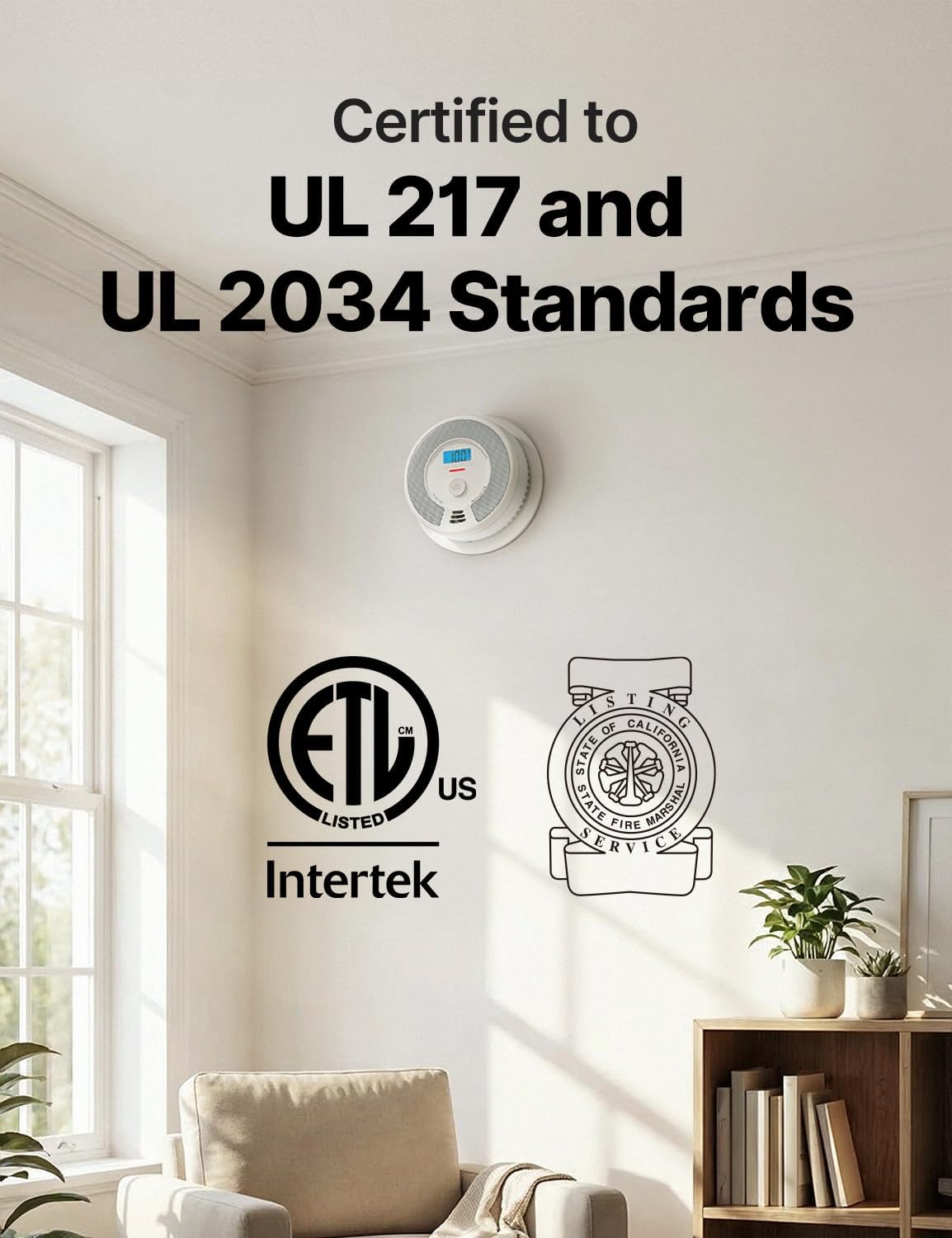
This is where the practitioner-level tradeoff becomes real: monitoring station contracts and municipal fire ordinances often require that life-safety devices be UL Listed for use in monitored systems — not just “UL Listed” generically, but listed under UL 217 (smoke alarms) or UL 2034 (CO alarms) for the intended application.
The 2022 revision of UL 217 introduced photoelectric-only requirements for single-station alarms — a shift SecurityInfoWatch’s 2024 feature on life-safety monitoring workflows called “the most significant compliance change in a decade for residential installers.” Ionization-only detectors, which had been standard for 30+ years, no longer meet UL 217 for new installations. If you’re upgrading a Vista-20P system that’s running older ionization four-wire heads, those detectors may no longer be UL 217 compliant under the current standard, which has insurance and monitoring contract implications.
NFPA 72’s Annex C spells out the signal transmission requirements for monitored systems: fire signals must be transmitted to the supervising station within 90 seconds of alarm initiation. This is why cheap Z-Wave or Wi-Fi smoke alarms that route through a cloud server with unpredictable latency create compliance headaches — the path isn’t reliable enough to guarantee that 90-second window under NFPA’s framework.
The practical upshot: always verify that any life-safety device you’re speccing carries the correct UL listing for your installation type, and confirm with your monitoring station that they’ll accept the signal format from your panel’s integration path before you install.
Panel-by-Panel Compatibility Notes
Honeywell Resideo Vista-20P: Alarm Grid’s documentation (consistently the most granular public resource for Vista compatibility) confirms that four-wire conventional smoke detectors on zone 1 (configured as fire zone type) are the standard path. The Honeywell COSMO-4W combo smoke/CO unit is a clean single-device solution for new installs. For CO-only zones, the System Sensor CO1224T is widely used in hardwired configurations.
DSC PowerSeries Neo: DSC’s own compatibility matrix lists System Sensor and Bosch-branded four-wire detectors for conventional zones. The Neo’s fire zone programming is more granular than the Vista-20P’s — you can specify detector type (heat, smoke, CO) per zone, which affects how the panel reports to the central station.
Qolsys IQ Panel 4: Native first-party wireless life-safety devices are the cleanest path. Across installer forums aggregated in SecurityInfoWatch’s coverage, the recurring practitioner consensus is to avoid mixing Qolsys with third-party RF life-safety devices unless you’ve confirmed supervision compatibility in writing with the device manufacturer — because a supervision failure on a life-safety zone that isn’t caught is a liability event, not just a tech headache.
Ring Alarm Pro: Ring’s life-safety integration is the most consumer-oriented of the bunch. The Ring Alarm Smoke & CO Listener is not a detector — it’s a Z-Wave device that listens for the 3-pulse T3 pattern of any standalone alarm and sends a notification to the Ring app. Per Ring’s own product documentation, it does not provide supervised monitoring in the NFPA 72 sense. Professional monitoring through Ring Protect Pro will receive the notification, but whether your monitoring station treats it as a confirmed fire signal equivalent to a supervised detector varies by station. Confirm with your monitoring provider before relying on this path for a client installation.
Who This Is For — and Who Should Skip What
Four-wire hardwired conventional is for you if: You’re working on a Vista-20P, DSC Neo, or Bosch Solution 6000 panel, you have the panel access and wiring skill to run 18/4 cable to detector locations, and you need a monitoring-station-accepted supervised signal. This is the most reliable, most auditable path.
Wireless first-party devices are for you if: You’re on a Qolsys IQ4 or similar panel, the installation is a retrofit where fishing wire is impractical, and you’re staying within the manufacturer’s ecosystem. Budget an extra 20–30% hardware cost versus standalone units.
Skip the Z-Wave/Wi-Fi consumer detector if: You have a professional monitoring contract. The supervision gap and NFPA 72 transmission latency concerns are real, and no amount of “it works fine” anecdote changes the liability exposure if a signal is delayed or dropped during an actual event.
Skip the addressable path if: You have fewer than 10–12 detection points and you’re not already committed to an addressable-capable panel. The programming complexity and hardware cost premium don’t pay off at residential scale.
The Decision Rule
Here’s the clean “if X, then Y” framework:
- If you have a hardwired panel (Vista, DSC Neo, Bosch): Spec four-wire, panel-powered, UL 217–compliant photoelectric detectors on dedicated fire zones. Confirm your monitoring station’s acceptance. Alarm Grid’s compatibility guides are the most reliable free resource for cross-referencing specific part numbers to specific panels.
- If you have a wireless panel within a single manufacturer’s ecosystem (Qolsys, Abode): Buy that manufacturer’s native life-safety devices. The supervision guarantee is worth the premium.
- If you’re on Ring Alarm Pro and need professional monitoring: Have a direct conversation with your monitoring station about whether the Smoke & CO Listener satisfies their fire signal acceptance criteria before selling that path to a client.
- If a client has standalone battery smoke alarms and is asking whether they’re “integrated”: They’re not. The upgrade path depends entirely on the panel — but there is always a path. Start with what panel they have, then work backward to the right detector architecture.
The life-safety integration conversation is one of the highest-stakes spec decisions in residential alarm work — not because it’s technically complicated, but because the gap between “sounds like integration” and “is actually supervised and monitored to code” is where liability lives. Get the detector right, and the rest of the system’s capability becomes something you can actually stand behind.