If you’ve been shopping home security systems for more than fifteen minutes, you’ve run into SimpliSafe and Ring Alarm. Both are what the industry calls self-install wireless alarm systems — meaning the sensors, keypad, and central hub arrive in a box and you place them yourself, no technician required. Both offer professional monitoring, the service where a 24/7 call center receives an alert the moment an alarm triggers and dispatches police or fire on your behalf. And both cost well under $500 to get started. The comparison sounds simple on paper. In practice, the pricing structures are layered enough that buyers who think they chose the cheaper option can end up paying significantly more over three or five years. This article shows you the full math, maps out where each system earns its cost, and gives you a clear decision rule at the end.
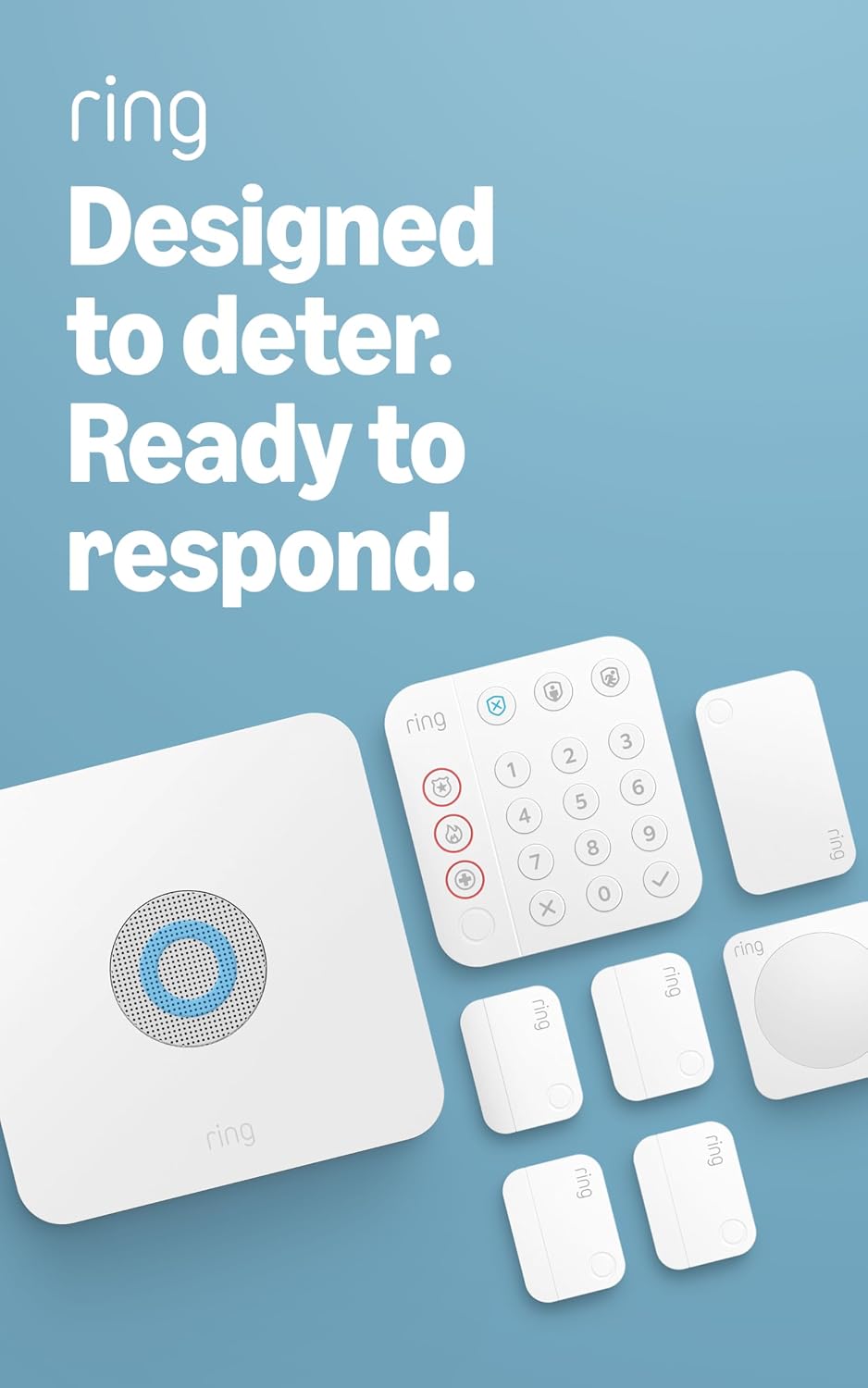
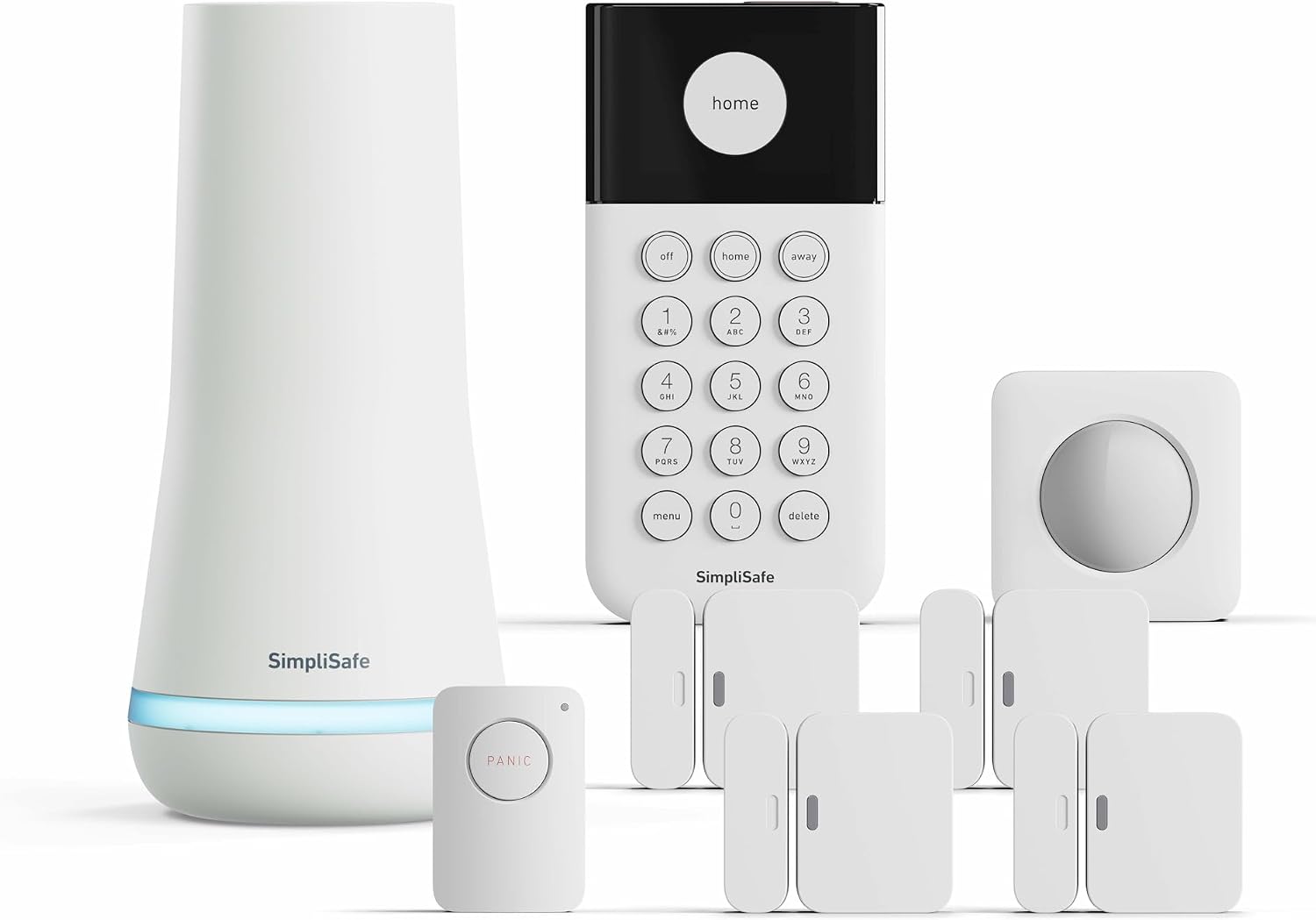
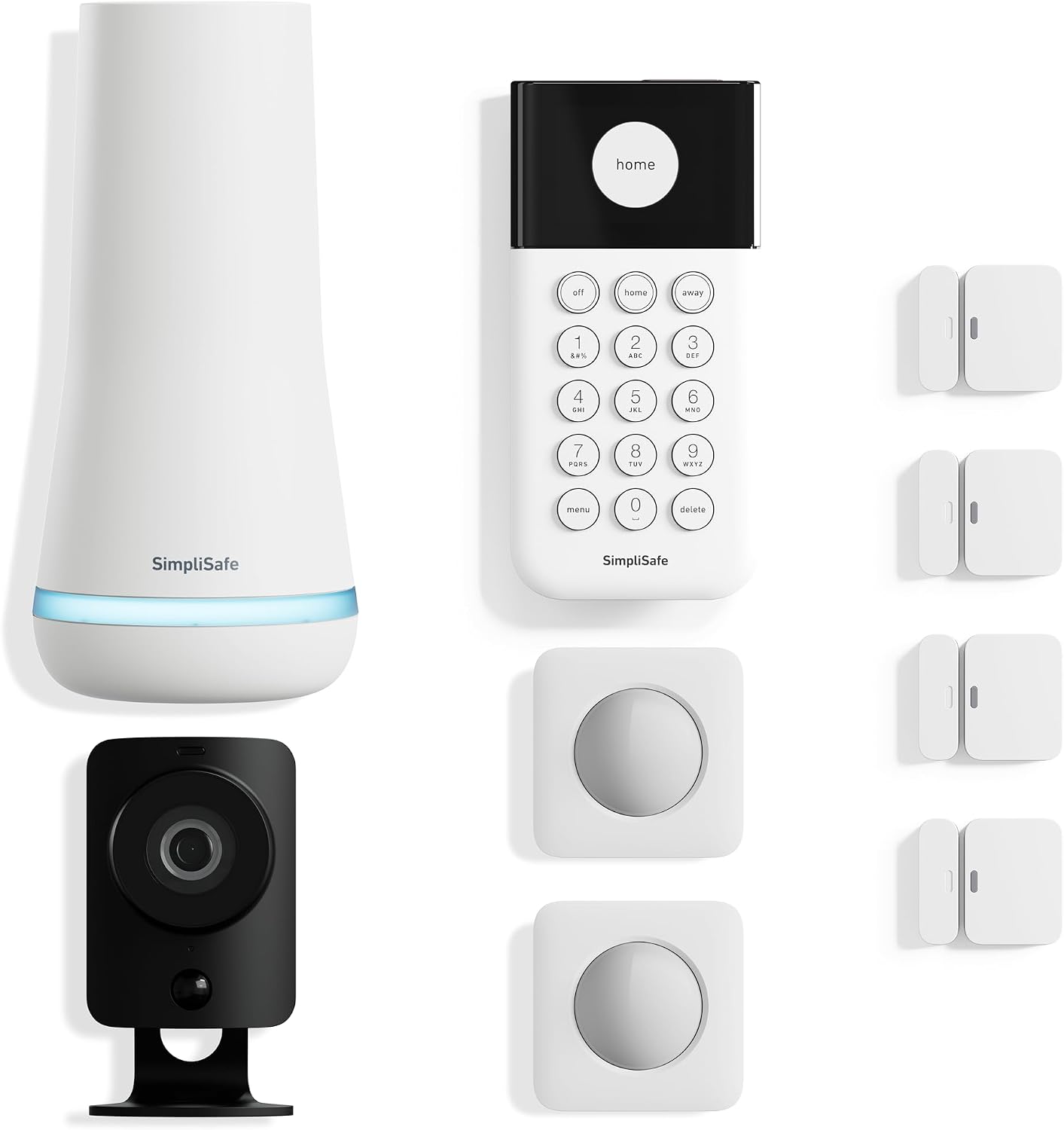
| EDITOR'S PICK[SimpliSafe 9 Piece Wireless Hom…](https://www.amazon.com/dp/B07GXW7KR6?tag=greenflower20-20) | Mid-tier[SimpliSafe 8 Piece Wireless Hom…](https://www.amazon.com/dp/B07C38HT49?tag=greenflower20-20) | Budget pick[Ring Alarm 8-Piece Kit (newest…](https://www.amazon.com/dp/B07ZPMCW64?tag=greenflower20-20) | |
|---|---|---|---|
| Camera incl. | ✓ | ✗ | ✗ |
| Sensors | 9 | 8 | 8 |
| Contract req. | ✗ | ✗ | — |
| Voice compat. | Alexa, Google | Alexa, Google | — |
| Price | $299.99 | $239.99 | $149.99 |
| See on Amazon → | See on Amazon → | See on Amazon → |
How the Pricing Structures Actually Work
Understanding the cost of either system means separating two completely different bills: the hardware purchase (a one-time cost) and the monitoring subscription (a recurring monthly fee). Confusing the two is the single most common mistake buyers make.
SimpliSafe’s Pricing Model
As of May 2026, SimpliSafe sells hardware kits directly, with starter configurations typically ranging from roughly $230–$330 for a small apartment bundle (base station, keypad, one entry sensor, one motion sensor, and a panic button) up to $500–$700 for larger home kits. Per SimpliSafe’s Monitoring Plans and Pricing page, three tiers are currently available:
- Standard Monitoring (~$19.99/month): 24/7 professional monitoring, cellular backup (the system uses a built-in cellular radio to reach the monitoring center even if your internet is cut), and live camera streaming. No video recording.
- Fast Protect™ Monitoring (~$29.99/month): Everything in Standard, plus Live Guard Pro — trained agents can visually verify an alarm via your cameras before dispatch — and unlimited camera recording.
- Self-Monitoring with Camera Recording (~$9.99/month): No professional monitoring. Alerts come to your phone only.
The cellular communicator is built into SimpliSafe’s base station — you don’t pay extra for it as hardware, but you do need a paid plan to activate the cellular uplink.
Ring Alarm’s Pricing Model
Ring’s structure ties more tightly to the Amazon ecosystem. Hardware kits as of May 2026 run from approximately $200–$260 for a 5-piece starter kit up to $330–$430 for an 8-piece or 14-piece kit. The Ring Alarm Pro — which adds a built-in eero Wi-Fi router and a backup internet connection via cellular — sits at a higher tier, typically $350–$500 for the base kit depending on sensor count.
Ring monitoring is sold through the Ring Protect Pro plan at approximately $20/month or $200/year (about $16.67/month annualized). This includes 24/7 professional monitoring and 24/7 cellular backup. There is no lower-cost professional monitoring tier — you’re either on Protect Pro or you’re self-monitoring for free.
As noted in CNET’s Ring Alarm Pro review (cnet.com, 2025), the Protect Pro plan’s cellular backup is tied to a specific data allotment for the Ring Alarm Pro’s internet-backup feature. Standard Ring Alarm (non-Pro hardware) uses the cellular connection only for alarm signaling, which is functionally equivalent to SimpliSafe’s Standard plan.
The 5-Year Honest Tally
The following three scenarios cover the most common buyer profiles. All figures use May 2026 published pricing. Hardware costs are treated as one-time; monitoring is calculated at the monthly rate multiplied by 60 months with no assumed price increases — a conservative assumption, given that both companies have raised rates at least once in the past four years, as tracked by SafeWise in their SimpliSafe vs. Ring Alarm head-to-head comparison (safewise.com, 2026).
Budget Scenario: Small Apartment, Basic Coverage
Ring
$149.99
In stock on Amazon
Check price on Amazon| SimpliSafe | Ring Alarm | |
|---|---|---|
| Hardware | ~$260 (starter kit) | ~$220 (5-piece kit) |
| Monitoring plan | Standard, ~$19.99/mo | Protect Pro, ~$20/mo |
| Monitoring cost (5 yr) | $1,199 | $1,200 |
| 5-Year Total | ~$1,459 | ~$1,420 |
At the entry level, the two systems are nearly identical in five-year cost. Ring saves roughly $40 on hardware; monitoring is a wash. Neither system has a meaningful cost advantage here. The decision comes down to ecosystem preference and app experience rather than economics.
Ring
$149.99
In stock on Amazon
Check price on AmazonMid-Tier Scenario: 3-Bedroom Home, Full Sensor Coverage
SimpliSafe
$239.99
In stock on Amazon
Check price on Amazon| SimpliSafe | Ring Alarm | |
|---|---|---|
| Hardware | ~$580 (large kit) | ~$400 (14-piece kit) |
| Monitoring plan | Fast Protect, ~$29.99/mo | Protect Pro, ~$20/mo |
| Monitoring cost (5 yr) | $1,799 | $1,200 |
| 5-Year Total | ~$2,379 | ~$1,600 |
This is where the gap becomes significant. If you’re equipping a full-size home and want SimpliSafe’s video verification capability (Fast Protect), you’ll spend roughly $779 more over five years than a Ring Alarm owner on equivalent square footage. The $10/month monitoring delta compounds to $600 over five years, and SimpliSafe’s per-sensor hardware cost on larger kits adds the remaining gap. PCMag’s SimpliSafe Home Security System review (pcmag.com, 2025) acknowledges this cost structure directly, noting that Fast Protect is a premium tier whose value depends entirely on whether you deploy SimpliSafe cameras to support Live Guard Pro.
SimpliSafe
$239.99
In stock on Amazon
Check price on AmazonPremium Scenario: Video Verification Priority, Mid-Size Home
SimpliSafe
$299.99
In stock on Amazon
Check price on Amazon| SimpliSafe | Ring Alarm Pro | |
|---|---|---|
| Hardware | ~$400 (mid kit + cameras) | ~$420 (8-piece Pro kit) |
| Monitoring plan | Fast Protect, ~$29.99/mo | Protect Pro, ~$20/mo |
| Monitoring cost (5 yr) | $1,799 | $1,200 |
| 5-Year Total | ~$2,199 | ~$1,620 |
For buyers who want both professional monitoring and smart home integration at the highest capability level, Ring Alarm Pro and SimpliSafe Fast Protect are the two relevant options. Ring Alarm Pro’s built-in eero Wi-Fi 6 router collapses two purchases for buyers who need a new router — a point CNET’s Ring Alarm Pro review (cnet.com, 2025) specifically highlights as a genuine value-stacking benefit for new homeowners or those replacing aging networking hardware. SimpliSafe Fast Protect counters with Live Guard Pro visual verification, a feature Ring has no equivalent for as of May 2026. The five-year cost delta here is approximately $579 in Ring’s favor, but SimpliSafe is delivering a specific capability — live-agent camera verification before dispatch — that Ring simply does not offer at any price point.
SimpliSafe
$299.99
In stock on Amazon
Check price on AmazonWhere SimpliSafe Earns Its Premium
The math above makes SimpliSafe look like the worse deal in most scenarios, and on pure total cost it is. But cost isn’t the only variable. The Wirecutter guide to the best home security systems (New York Times / Wirecutter, last updated 2026) consistently names SimpliSafe’s monitoring reliability and customer service reputation as differentiators worth factoring into a purchase decision.
Live Guard Pro and visual verification: SimpliSafe’s Fast Protect tier lets monitoring agents view your indoor camera feed during an alarm event before they call police. This materially reduces false dispatch — a genuine concern for households with pets, children, or high-traffic entry zones. PCMag’s SimpliSafe Home Security System review (pcmag.com, 2025) identifies Live Guard Pro as one of the few features in the consumer-grade security market that meaningfully changes monitoring outcomes rather than being a marketing differentiator. Ring offers no equivalent live-agent camera verification service as of May 2026.
No single-ecosystem dependency: Ring is an Amazon subsidiary. Its value proposition deepens meaningfully if you’re already invested in Ring cameras, Ring Video Doorbells, and Alexa-driven automation — but buyers outside that ecosystem capture fewer of those benefits. SimpliSafe integrates with Google Home, Amazon Alexa, and Apple HomeKit without requiring you to organize your home around a single vendor’s products.
Contract-free monitoring confirmed on both sides: Both systems are month-to-month with no long-term contract required. SafeWise’s SimpliSafe vs. Ring Alarm comparison (safewise.com, 2026) confirms this for both platforms. This is worth stating plainly because many professionally monitored alarm systems historically used 3-year contracts with early-termination penalties — neither of these systems does that.
Where Ring Alarm Earns Its Position
Hardware cost efficiency at scale: Once you move past a 5-piece starter kit, Ring’s per-sensor cost on add-on hardware is competitive with or below SimpliSafe’s equivalent sensors, based on both manufacturers’ published individual sensor pricing as of May 2026. Buyers outfitting a larger home will spend less on Ring hardware for equivalent coverage.
Ring Alarm Pro dual-purpose value: The Ring Alarm Pro bundles a built-in eero Wi-Fi 6 router. For buyers setting up a new home or replacing an aging router, the effective security system hardware cost drops substantially when the router purchase is absorbed. CNET’s Ring Alarm Pro review (cnet.com, 2025) frames this as a legitimate value stack rather than a gimmick, particularly for buyers who would have spent $150–$250 on a standalone mesh router anyway.
Flat monitoring pricing regardless of feature use: Ring’s Protect Pro plan includes cellular backup, professional monitoring, and camera recording storage at a single flat rate. SimpliSafe’s comparable feature set requires Fast Protect at $29.99/month. If you want the full capability of either platform, Ring’s flat rate is structurally cheaper.
Alexa and Ring camera integration: For buyers with existing Ring Video Doorbells or Ring Floodlight Cams, alarm events can trigger coordinated camera recording automatically and everything surfaces in a single app view. The Wirecutter best home security systems guide (New York Times / Wirecutter, last updated 2026) notes this consolidated experience as a genuine usability advantage for Ring-ecosystem households.
Who Should Skip Each System
Skip SimpliSafe Fast Protect if you have no cameras and don’t plan to add them. Live Guard Pro visual verification — the entire justification for the $29.99/month tier — requires SimpliSafe cameras to function. Without cameras, you’re paying $10/month more than Ring Protect Pro for functionally equivalent professional monitoring, and the five-year cost penalty is real.
Skip Ring Alarm if you want a middle-ground monitored option below Protect Pro pricing. Ring has no such tier. You’re also making a poor choice if your home has existing hardwired sensors you want to integrate — Ring, like SimpliSafe, supports only wireless sensors and cannot accept input from legacy wired zones. For homes with existing wired infrastructure, neither platform belongs in the conversation; Qolsys IQ Panel 4 or DSC PowerSeries Neo platforms are the appropriate starting point.
Skip both systems if your priority is third-party professional monitoring through an independent central station, or if you want to own the cellular communicator outright and choose your monitoring provider separately. Both SimpliSafe and Ring use proprietary communicators locked to their own monitoring networks. Alarm Grid’s published documentation on compatible panels (alarmgrid.com) makes clear that DSC PowerSeries Neo and Honeywell/Resideo Vista-series panels with third-party communicators are the correct architecture for buyers who want monitoring portability. Neither SimpliSafe nor Ring supports that model.
The Decision Rule
If you have Ring cameras already or plan to buy them, and you want the lowest five-year total cost: Ring Alarm — or Ring Alarm Pro if you need a new router — with Protect Pro is the straightforward answer. Ecosystem integration is real, monitoring price is flat, and hardware cost advantage on larger kits compounds favorably.
If reducing false dispatch is your top priority and you’re willing to pay for it: SimpliSafe Fast Protect with Live Guard Pro is the only consumer-grade option offering live visual verification from the monitoring center before police dispatch. The premium runs roughly $600 more over five years compared to Ring Protect Pro, but it’s buying a specific capability Ring does not offer.
If you’re on a strict budget and need professional monitoring: Ring’s Protect Pro at approximately $200/year annualized is the lowest-cost entry to true professional monitoring with cellular backup in this category. SimpliSafe Standard at $19.99/month is one dollar more per month for functionally equivalent core monitoring — effectively a coin flip on economics, with slight hardware savings on Ring’s side.
If you’re a property manager or prosumer evaluating either system for deployment beyond a single residence: Be clear-eyed about what these platforms are — excellent consumer-grade wireless systems with proprietary monitoring lock-in. Neither system belongs in a context requiring multi-zone hardwired architecture, third-party monitoring flexibility, or commercial UL-listed panel certifications. The Qolsys and DSC ecosystems, as documented extensively by Alarm Grid (alarmgrid.com), exist precisely for those requirements.
The five-year math doesn’t lie, and neither platform is hiding anything. Ring wins on total cost in most configurations. SimpliSafe wins on visual verification capability. Everything else is ecosystem preference.