Ring Alarm is one of the easiest home security systems to find in a box store or online — kits range from a basic 5-piece starter set to a 14-piece package designed for a multi-room house, and the hardware prices feel approachable compared to professionally installed competitors. But here’s what a lot of buyers miss: the hardware you pay upfront is a one-time sunk cost, while the monitoring plan — the monthly fee that connects your system to a 24/7 response center, arms the cellular backup, and unlocks most of the features you bought the system for — runs for years. Over a five-year window, monitoring fees routinely double or triple the total cost of ownership. If you’re advising a homeowner, spec’ing a rental unit, or deciding between Ring and a competing platform, you need to work from the full number, not the sticker.
This guide breaks down every current Ring Alarm kit tier, maps each to its realistic monitoring path, and shows the math you need to make a defensible recommendation.
What You’re Actually Buying: Hardware vs. Monitoring vs. Features
Before the numbers, a quick map of Ring’s monetization structure — because it’s layered in a way that can obscure true cost.
Hardware is the physical kit: the base station (the central brain that communicates with sensors and your cellular or Wi-Fi network), contact sensors (door/window detectors), motion detectors, keypads, and any add-ons like range extenders or panic buttons. You pay for this once. Ring manufactures two generations of panels currently in circulation as of May 2026: the original Ring Alarm and the Ring Alarm Pro, which adds a built-in Eero Wi-Fi 6 router and an integrated cellular backup module at the hardware level.
Monitoring is where the recurring cost lives. Ring offers three tiers:
- No plan / self-monitoring only — free. You get app notifications and can arm/disarm remotely, but there is no professional dispatch, no cellular backup, and no 24/7 response if your internet goes down.
- Ring Protect Basic (~$4.99/month per device or ~$49.99/year per device) — adds video recording for one camera or doorbell. Does not add professional alarm monitoring.
- Ring Protect Pro (~$20/month or ~$200/year, per location) — this is the tier that actually activates professional 24/7 monitoring, cellular backup for the Alarm base station, and extended video history for unlimited Ring cameras at that address.
That layering matters enormously. The Protect Basic plan at $4.99/month is frequently cited without context across review sites, but it does not give you monitored security. If your customer wants a professionally monitored system — a reasonable assumption for anyone building a real alarm installation — the operative price is Protect Pro at $200/year.
Per Ring’s official product listings (May 2026), and consistent with reporting by PCMag in their Ring Alarm Pro review and by SafeWise in their 2026 Ring Alarm review, these rates have held since Ring repriced Protect Pro in late 2022. Budget assuming they hold, but flag to clients that Ring has repriced plan tiers more than once in the past four years.
Kit Tier Breakdown and 5-Year Total Cost
Here’s where we do the actual math. All hardware prices are manufacturer list prices as of May 2026; street prices vary and Ring runs periodic promotional discounts. Monitoring cost assumes Protect Pro ($200/year) as the baseline, because self-monitoring is not a credible residential security strategy for most buyers.
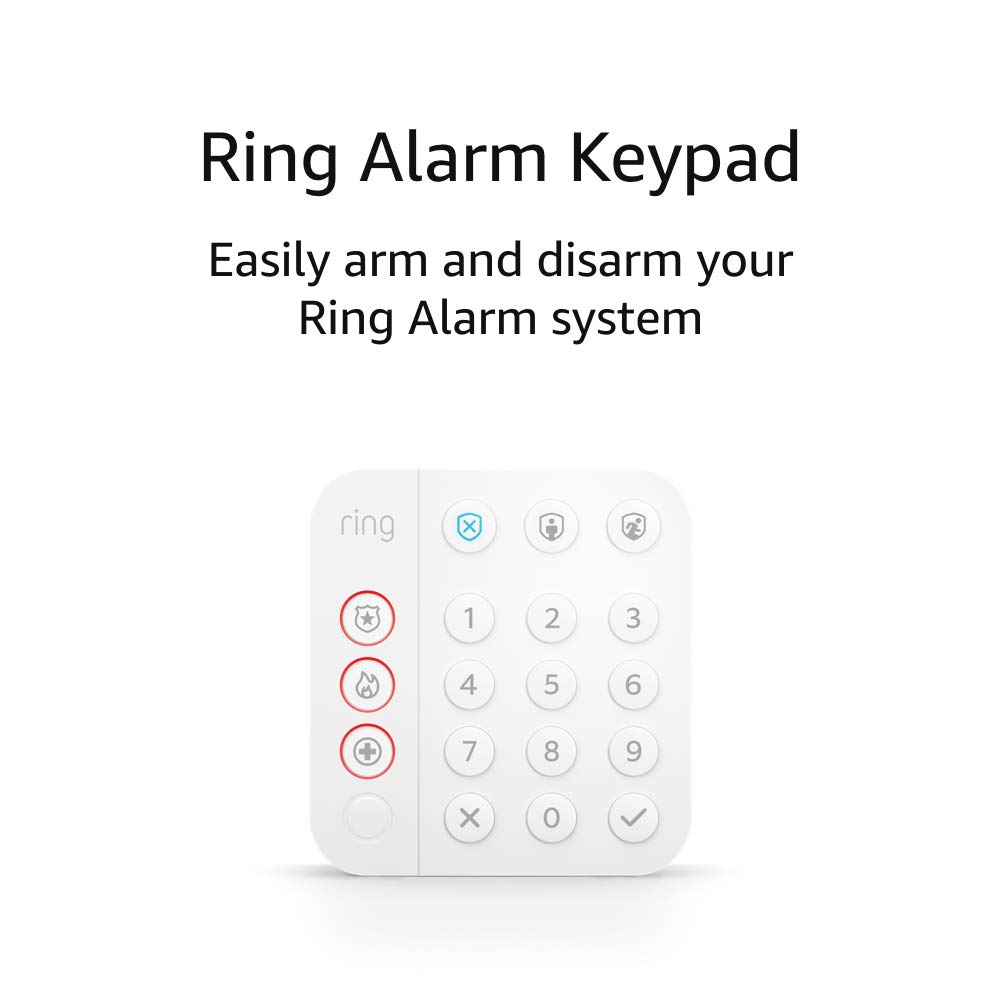
Ring Alarm 5-Piece Starter Kit
The entry-level kit covers a single door of entry, one motion zone, and a keypad. It is the right starting point for an apartment, a small rental unit, or a buyer who wants to trial the platform before expanding.
| Approx. Hardware MSRP | ~$200 |
| 5-Year Monitoring (Protect Pro) | $1,000 |
| 5-Year Total Cost | ~$1,200 |
At this tier, monitoring accounts for roughly 83% of the five-year total. A buyer who sees the $200 price tag and expects a $200 security system will need a frank conversation about the real commitment.
Ring
$19.99
In stock on Amazon
Check price on AmazonRing Alarm 8-Piece and 14-Piece Standard Kits
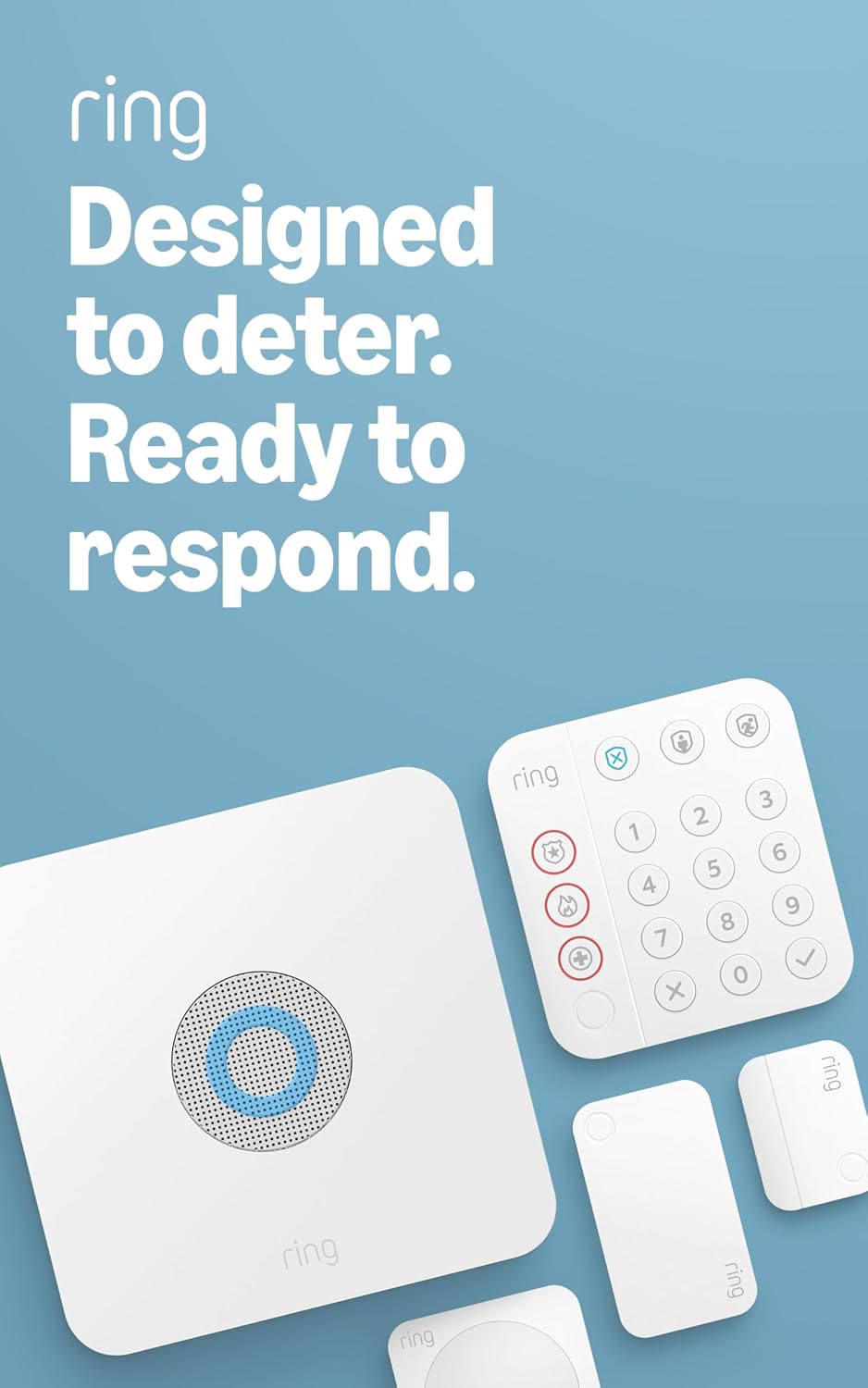
The mid-tier standard kits add contact sensors for additional doors and windows, and the 14-piece version includes enough coverage for a typical three-bedroom single-family home. The hardware delta between the 8-piece ($280) and 14-piece ($330) is modest; the monitoring cost is identical.
| 8-Piece | 14-Piece | |
|---|---|---|
| Approx. Hardware MSRP | ~$280 | ~$330 |
| 5-Year Monitoring (Protect Pro) | $1,000 | $1,000 |
| 5-Year Total Cost | ~$1,280 | ~$1,330 |
The $50 delta between kit sizes buys you six additional sensors. If coverage is the goal — not just platform entry — the 14-piece is almost always the correct choice at this tier. The monitoring cost is the same either way.
Ring
$119.99
In stock on Amazon
Check price on AmazonRing Alarm Pro 8-Piece and 14-Piece Kits
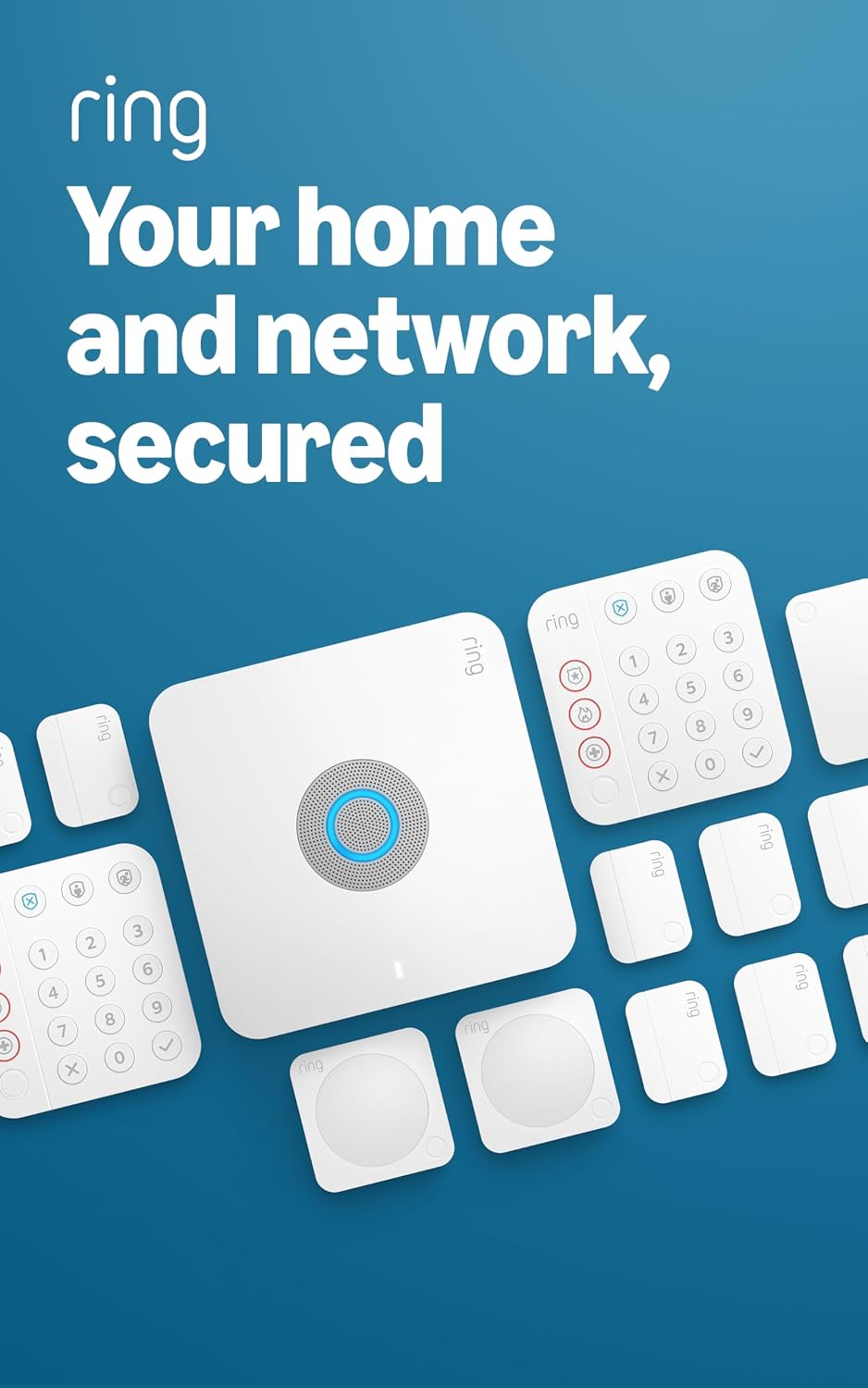
The Pro line replaces the standard base station with a unit that incorporates a built-in Eero Wi-Fi 6 mesh node and a dedicated hardware-level cellular backup module. That distinction matters architecturally: the standard Ring Alarm panel relies on a software-layer LTE path activated through Protect Pro, while the Pro’s cellular backup operates through a separate hardware path.
SecurityBaron, in their Ring Alarm vs. SimpliSafe full comparison, notes that the Pro’s hardware-level cellular path continues functioning even under conditions that might affect the standard panel’s software-layer backup — a distinction that is relevant for installations where the homeowner travels frequently or where ISP reliability is a known variable.
| Pro 8-Piece | Pro 14-Piece | |
|---|---|---|
| Approx. Hardware MSRP | ~$430 | ~$530 |
| 5-Year Monitoring (Protect Pro) | $1,000 | $1,000 |
| 5-Year Total Cost | ~$1,430 | ~$1,530 |
The Pro 8-Piece costs roughly $150 more than the standard 8-Piece. Spread over five years, that premium works out to $30 per year — a negligible difference in context. For installations where cellular backup reliability is a genuine priority, the Pro’s architecture is the more defensible specification.
Ring
$265.99
In stock on Amazon
Check price on AmazonWhat $200/Year Actually Buys — and Where the Ceiling Is
Since monitoring is the dominant cost driver at every kit tier, it’s worth being precise about what Protect Pro does and does not include.
What Protect Pro covers at an address-based price of ~$200/year:
- Professional 24/7 alarm monitoring with police, fire, and medical dispatch capability
- Cellular backup (the base station maintains alarm communication over LTE if your internet connection is cut)
- Unlimited Ring camera video history (up to 180 days) for every Ring camera at the address
- Snapshot capture and person detection features across Ring cameras
- Ring’s Alarm Cellular Backup service (the software-layer LTE path for standard Alarm panels)
What it does not cover:
- Extended warranty or hardware replacement beyond Ring’s standard one-year hardware warranty
- Professional installation — Ring is DIY by design, and monitoring does not change that
- Integrations with third-party automation platforms such as Control4 or Lutron in any native driver sense — Ring’s ecosystem remains comparatively closed relative to Qolsys or DSC-based platforms
CNET, in their Best Home Security Systems of 2026 roundup, notes that Ring’s monitoring response infrastructure has improved in recent years but that Ring’s central station does not carry the UL listing that some insurance carriers and commercial property managers require. That is a hard stop for any buyer whose insurance carrier specifies UL-listed monitoring as a condition of coverage, and for any property manager with commercial-adjacent liability requirements. UL’s published standards for central station alarm services (UL 827) define the certification criteria; installers who need to verify a monitoring provider’s certification status can reference UL’s online certification directory directly.
PCMag’s Ring Alarm Pro review draws a similar conclusion: Ring is an excellent consumer platform within its design parameters, and those parameters explicitly exclude the commercial-grade certification tier.
Who This Is For — and Who Should Look Elsewhere
Ring Alarm makes clear sense when:
- The end user is already in the Ring/Amazon ecosystem with existing Ring doorbells, floodlights, or Echo devices — the unified app integration is genuine and the platform cohesion is a real usability advantage
- The installation is a rental unit, vacation property, or primary residence where DIY setup without professional wiring is the right operational fit
- Budget is constrained and the buyer understands they are accepting consumer-grade monitoring in exchange for flexibility and lower upfront cost
- Self-monitoring is genuinely the intent — for a vacation cabin with irregular occupancy, for instance, the $0 monitoring tier is a legitimate choice rather than a compromise
Steer the conversation elsewhere when:
- The buyer needs UL-listed monitoring for insurance or liability purposes — SimpliSafe’s Fast Protect monitoring tier operates through a UL-listed central station, and Qolsys IQ Panel 4 systems sourced through professional dealers like Alarm Grid support UL-listed monitoring partners
- The installation involves more than 20 sensors or multiple buildings — Ring’s panel architecture does not scale the way a DSC PowerSeries Neo or Honeywell Vista-20P does; zone limitations will force a re-platform conversation within 18 months
- The homeowner uses Control4 or Lutron for whole-home automation — platforms with native Control4 drivers (Qolsys, DSC) or documented Home Assistant community integrations will deliver a cleaner experience than Ring’s constrained API allows
- The property is a multi-unit building — Ring’s address-based Protect Pro pricing was designed for single-household use, and managing multiple monitoring accounts at scale adds administrative friction that compounds quickly
SafeWise’s 2026 Ring Alarm review reaches a consistent conclusion: Ring is a top-tier consumer platform for single-family DIY buyers and a poor fit for anything requiring scalability, commercial-grade monitoring certification, or deep third-party integration.
The Decision Rule
If you’re evaluating Ring Alarm against alternatives for a client or your own installation, here’s the clean frame:
If the 5-year budget is under $1,500 and the installation is a single-family or apartment DIY scenario with existing Ring camera hardware: the Ring Alarm Pro 8-Piece with Protect Pro is the defensible recommendation. The hardware premium over the standard panel is negligible spread over time, the cellular backup architecture is more robust at the hardware level, and the camera ecosystem integration is the real value driver at this tier.
If the 5-year budget is $1,500–$3,000 and the buyer wants professional monitoring, multi-zone expansion, or smart-home integration beyond Ring: the math starts to favor platforms like Qolsys IQ Panel 4 or SimpliSafe’s professional monitoring tier, where monitoring costs are comparable but the hardware ceiling, UL listing availability, and integration capability are meaningfully higher.
If the client is a property manager or independent installer spec’ing multiple units: Ring is almost never the right platform at volume. The per-address monitoring model, closed API, and absence of central-station-grade certification create a corner that is difficult to exit gracefully. The additional upfront investment in a Napco or DSC-based communicator setup with professionally sourced hardware pays back in serviceability and contract defensibility within 18–24 months.
The sticker price on the box is the opening number in a five-year conversation. Work from the full number, and the right platform usually becomes obvious.